Data Built for an AI Future You Can't Predict Yet
Most organizations are being told to make their data “AI-ready,” but few have had to do so at the scale of the NIH, where a dataset built for one purpose can end up training AI models a decade later for something nobody originally imagined.
Join Merav Yuravlivker of Data Society and Chris Kinsinger of the NIH Common Fund for a grounded conversation about what it actually takes to build data that outlives its original purpose.


Join the Conversation
Free to attend . Live virtual fireside chat
A REAL-WORLD EXAMPLE
When Data Outlives Its Original Purpose
Back in 2011, Chris helped plan a cancer proteomics data-generation program to better understand the connection between genetic mutations and cancer biology in cancer. He had no idea that by 2024, those data would be used to train AI models for identifying cancer drug targets. Now, through the Bridge2AI program, his team is trying to close that gap on purpose by building data sets designed for AI use from the start. Think voice as a biomarker to screen for Parkinson’s and Alzheimer’s, or mining ICU data from over 100,000 patients to predict deadly complications before they happen.
What You'll Walk Away With
Building Data for an AI Future You Can't Predict
With so much attention on where AI goes wrong, this is a rare, grounded look at AI for good in action, work that could genuinely change how we catch disease and save lives.
In this conversation, Merav and Chris explore what it takes to build data for uses you can't yet see coming, and why the most valuable data sets are often the ones built with the most patience.
Listeners will walk away with a real look at how one of the country's largest research funders approaches AI readiness and what that means for anyone building data infrastructure meant to last.
-

Build for uses you can’t see coming: Learn why the most valuable datasets may eventually serve purposes their original teams never imagined.
-

Design AI-ready data from the start: See how programs like Bridge2AI are creating datasets intentionally designed for future AI applications.
-

Learn from AI at national research scale: Hear how the NIH Common Fund approaches data and AI strategy across complex, multidisciplinary research programs.
-

See AI for good in action: Explore real applications—from using voice as a biomarker for Parkinson’s and Alzheimer’s to predicting dangerous ICU complications.
-

Why investing in your existing workforce is often faster, more effective, and more sustainable than buying talent from the outside.
Who Should Attend
For Leaders Building Data
That Needs to Last
If you're responsible for data strategy, AI readiness, research infrastructure, or building systems that need to support future use cases, this conversation was designed for you.
.svg)
Chief Data Officers & Data Leaders
Building long-term data strategies while preparing organizations for emerging AI use cases.

AI & Analytics Leaders
Moving from AI experimentation toward scalable, trustworthy AI implementation.

Research & Public Sector Leaders
Managing complex data ecosystems across large-scale research and public-sector programs.

Data & Technology Teams
Building the infrastructure, standards, and foundations that make future AI possible.
Meet the Speakers
A Conversation Between Two Data Leaders
Merav Yuravlivker
Chief Learning Officer · Data Society
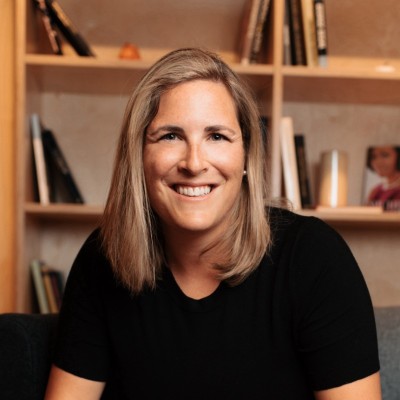
Merav Yuravlivker is the Chief Learning Officer at Data Society, where she leads the organization’s approach to AI and data education, workforce transformation, and learning strategy.
In this fireside chat, Merav will explore what organizations can learn from the NIH’s experience building data for applications and technologies that may not yet exist.
Dr. Chris Kinsinger
Assistant Director for Catalytic Data Resources · NIH Common Fund
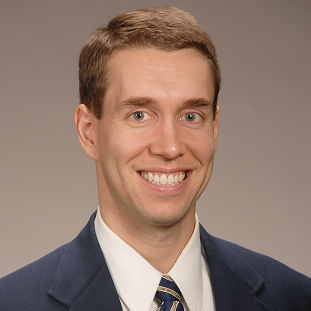
Dr. Chris Kinsinger is the Assistant Director for Catalytic Data Resources in the Office of Strategic Coordination of the National Institutes of Health (NIH). He leads data strategy and AI implementation across the research programs of the NIH Common Fund.
His portfolio includes Bridge2AI, Precision Medicine with Imaging and AI (PRIMED-AI), the Common Fund Data Ecosystem, the Gabriella Miller Kids First program, and the Human Biomolecular Atlas Program.
Before joining the Common Fund, Chris established a proteogenomic characterization pipeline for the National Cancer Institute. Through the CPTAC program, his team helped create some of the first large-scale datasets combining whole-exome sequencing, RNA sequencing, and mass-spectrometry-based proteomics from human tumor samples.
Chris holds a PhD in computational chemistry from the University of Minnesota. His passion is building research programs that bring together disparate fields of health science.
What to Expect
Join the Conversation on September 9
With so much attention focused on where AI goes wrong, this is a rare look at AI for good in action—and the data foundations making it possible.
Hear how the NIH approaches AI readiness at national research scale, and what that can teach anyone building data infrastructure meant to last.